Fueling the Transition: Government Policies and Incentives Driving EV Adoption Globally

Fueling the Transition: Government Policies and Incentives Driving EV Adoption Globally

The global surge in electric vehicle (EV) adoption is not a spontaneous market phenomenon. While technological advancements and consumer interest are crucial, the relentless push for cleaner transportation is a direct result of comprehensive and multifaceted government policies and incentives. Governments worldwide are acting as a powerful catalyst, addressing key barriers to EV ownership and creating an environment where a fossil-fuel-free future is not just a possibility, but an inevitability.

These policies can be broadly categorized into three key areas: fiscal incentives, regulatory frameworks, and infrastructure investment.

1. Fiscal Incentives: Reducing the Sticker Shock

The high upfront cost of EVs compared to their internal combustion engine (ICE) counterparts has historically been the biggest hurdle for consumers. Governments have used a combination of financial incentives to bridge this gap and make EVs a more economically viable choice.

  • Purchase Subsidies and Tax Credits: This is the most direct and widely used policy.
View More Fueling the Transition: Government Policies and Incentives Driving EV Adoption Globally
A Chemical Reaction on Wheels: How Hydrogen Fuel Cell Cars Work and Their Efficiency

A Chemical Reaction on Wheels: How Hydrogen Fuel Cell Cars Work and Their Efficiency

Hydrogen fuel cell vehicles (FCEVs) represent a fascinating and promising branch of the zero-emission automotive industry. Unlike battery electric vehicles (BEVs) that draw power from a large, pre-charged battery, FCEVs produce their own electricity on board, effectively acting as a small, mobile power plant. This process relies on a key chemical reaction within the heart of the car: the fuel cell stack.

How a Fuel Cell Car Works: The Simple Breakdown

At its core, a fuel cell vehicle is a type of electric car. It uses an electric motor to turn the wheels, but the source of its power is different. Here’s a step-by-step look at the process:

  1. Hydrogen Storage: The vehicle stores compressed hydrogen gas (H₂) in a high-pressure, reinforced tank.
  2. Air Intake: The car draws in oxygen (O₂) from the ambient air, typically through a front grille.
  3. The Fuel Cell Stack: This is where the magic happens. The
View More A Chemical Reaction on Wheels: How Hydrogen Fuel Cell Cars Work and Their Efficiency
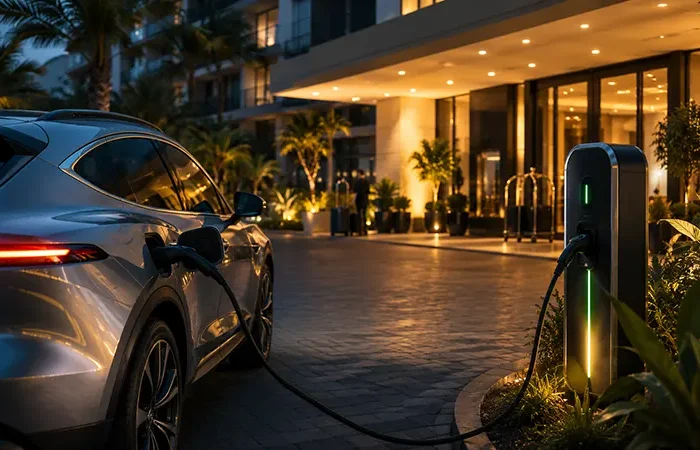
Plugged In for the Future: Key Trends in EV Charging Infrastructure Development Worldwide

Plugged In for the Future: Key Trends in EV Charging Infrastructure Development Worldwide

As electric vehicle (EV) sales continue their exponential climb, the global focus is shifting from a simple question of “if” EVs will succeed to a more complex one: “how” will we power them? The development of a robust, accessible, and intelligent charging infrastructure is the lynchpin of the EV revolution. Around the world, a series of critical trends are shaping this vital ecosystem.

1. The Rise of Fast Charging: The Race for Speed

The most significant trend in public charging is the rapid deployment of high-power DC fast chargers. While Level 2 chargers are sufficient for home or overnight charging, the need for quick top-ups on highways and in urban hubs is paramount for long-distance travel and daily convenience.

  • Higher Power Output: The new standard is increasingly moving beyond 50 kW to ultra-fast chargers delivering 150 kW, 250 kW, and even 350+ kW. These chargers can add hundreds of miles
View More Plugged In for the Future: Key Trends in EV Charging Infrastructure Development Worldwide
The High Price of Entry: The Cost and Availability of Hydrogen Fueling Stations for Cars

The High Price of Entry: The Cost and Availability of Hydrogen Fueling Stations for Cars

Hydrogen fuel cell vehicles (FCEVs) offer a compelling zero-emission alternative to battery-electric vehicles (BEVs) and traditional gasoline cars. They promise quick refueling times and long ranges, mirroring the convenience of the conventional gas station model. However, a significant obstacle to their widespread adoption is the sparse and costly infrastructure required to support them. The limited availability and high cost of hydrogen fueling stations represent a classic “chicken and egg” problem, where a lack of cars discourages station development, and a lack of stations discourages car sales.

The Cost to Build: A Multi-Million Dollar Investment

Building a hydrogen fueling station is a complex and expensive undertaking.1 Unlike an electric vehicle charging station, which can often be integrated into existing electrical infrastructure with relative ease, a hydrogen station requires a robust system for storage, compression, and dispensing.2

  • High Capital Costs: The cost to build a single hydrogen fueling station for
View More The High Price of Entry: The Cost and Availability of Hydrogen Fueling Stations for Cars
The Electric Revolution Accelerates: Global EV Market Share Forecast for 2030

The Electric Revolution Accelerates: Global EV Market Share Forecast for 2030

The automotive industry is undergoing a monumental shift, with electric vehicles (EVs) rapidly moving from niche status to the mainstream.1 Driven by environmental concerns, technological advancements, and supportive government policies, the global EV market is poised for explosive growth over the next decade. While exact figures vary between analytical firms, the consensus is clear: EVs will command a significant portion of the total vehicle market by 2030.2

Current Landscape: A Glimpse of the Surge

In recent years, EV sales have surged dramatically, consistently breaking previous records.3 This growth is evident across various segments, from passenger cars to commercial vehicles. Tesla, a pioneer in the space, continues to be a dominant force, but traditional automakers like Volkswagen, General Motors, Hyundai, and BYD have rapidly scaled up their EV offerings, introducing compelling models that rival their internal combustion engine (ICE) counterparts in performance, range, and increasingly, affordability.

Government incentives, …

View More The Electric Revolution Accelerates: Global EV Market Share Forecast for 2030
Hydrogen Fuel Cell vs. Electric Vehicles: The Race for Long-Haul Trucking

Hydrogen Fuel Cell vs. Electric Vehicles: The Race for Long-Haul Trucking

The future of long-haul trucking is at a crossroads, with hydrogen fuel cell electric vehicles (FCEVs) and battery electric vehicles (BEVs) vying for dominance in the quest for zero-emission transportation.1 Both technologies offer compelling advantages over traditional diesel engines, but they also face unique challenges when it comes to the demanding world of long-distance freight.

The Case for Battery Electric Vehicles (BEVs)

Battery electric trucks are essentially scaled-up versions of their passenger car counterparts. They store energy in large battery packs that power electric motors, offering instantaneous torque and silent operation.

Pros of BEVs for Long-Haul:

  • Established Technology: Battery technology is mature and rapidly improving, benefiting from decades of development in consumer electronics and passenger vehicles.2
  • High Efficiency: Electric powertrains are incredibly efficient, converting a large percentage of electrical energy into mechanical energy.3
  • Infrastructure Growth: Charging infrastructure is expanding, with more public and private charging stations becoming
View More Hydrogen Fuel Cell vs. Electric Vehicles: The Race for Long-Haul Trucking