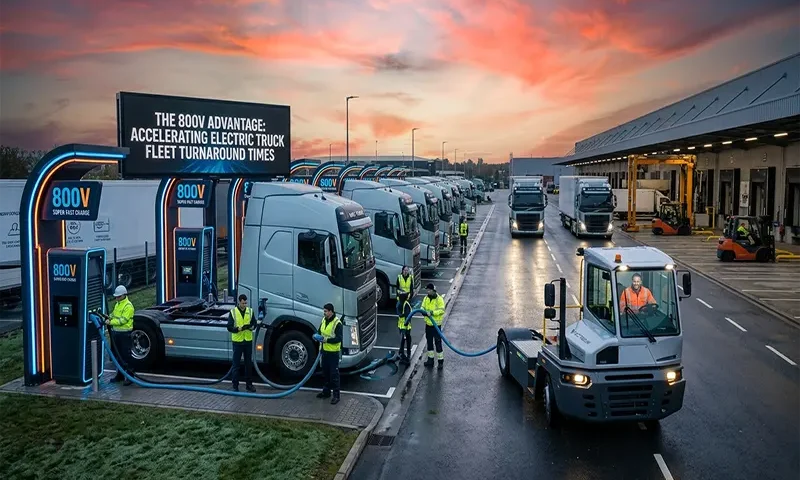
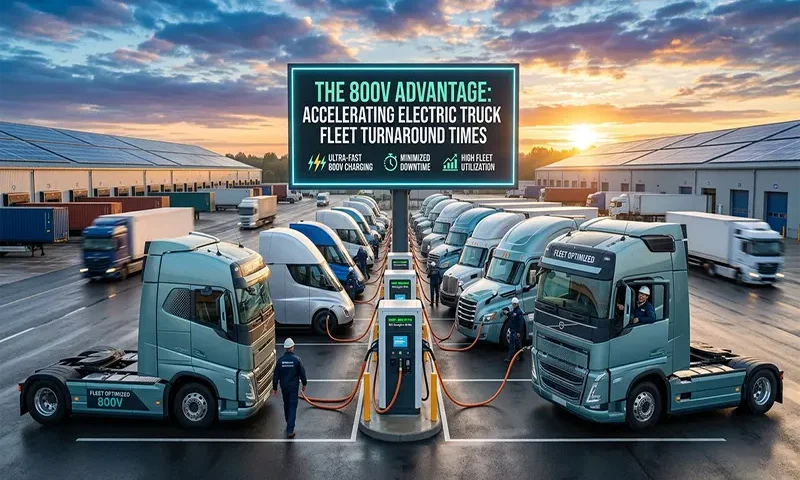
For heavy-duty electric vehicle (HDV) fleet operators, the primary metric of success is not just energy efficiency—it is uptime. In the world of logistics, a vehicle that is not moving is not earning. As electrification scales, the limitations of traditional 400V architectures are becoming a significant operational bottleneck, particularly when it comes to the time required to charge the massive battery packs needed for long-haul transport.
In 2026, the transition to 800V high-voltage architecture has moved from a luxury passenger-car trend to a fundamental requirement for the logistics industry. This shift is the primary enabler for the next generation of fleet productivity.
1. The Operational Bottleneck: Why 400V is Reaching Its Limit
Traditional 400V charging systems were designed for passenger vehicles with battery capacities typically ranging from 50–100 kWh. Scaling this architecture for an electric semi-truck with a 500+ kWh battery pack creates a massive throughput problem.
To achieve …
View More The 800V Advantage: Accelerating Electric Truck Fleet Turnaround Times