
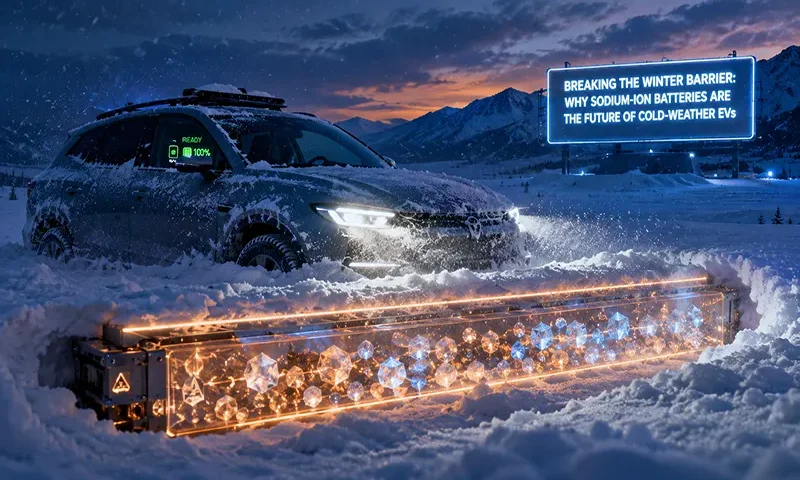
For years, “winter range anxiety” has been the primary barrier to mass electric vehicle (EV) adoption in northern latitudes. As temperatures drop, lithium-ion batteries—both the premium NMC and the mainstream LFP—face a triple threat: increased internal resistance, sluggish ion mobility, and the “parasitic” energy drain of active battery heating systems.
However, as of 2026, a shift is underway. Sodium-ion (SIB) battery technology is moving from the lab to the road, offering a solution that doesn’t just manage the cold—it thrives in it.
1. The Winter Dilemma: Why Lithium Struggles
To understand the breakthrough of sodium-ion, we must first look at why our current batteries struggle. In freezing temperatures, the electrolyte inside a lithium-ion battery becomes more viscous, slowing down the movement of ions.
Even more critical is the phenomenon of lithium plating. When charging a standard LFP battery below 0°C, lithium ions move too slowly to effectively insert themselves …
View More Breaking the Winter Barrier: Why Sodium-Ion Batteries are the Future of Cold-Weather EVs